Penetration Testing

White hat hackers are paid by an organisation to test their cybersecurity defenses.
If they find a vulnerability, they report back to the organisation and explain their findings so the system can be secured. They do not damage or steal from a system.
Because they have permission to "hack" a system, penetration testing is legal – and can be very well paid!
Physical Security

Locking doors to rooms can prevent theft of systems and unauthorised access to data.
Access for authorised users can be granted via RFID (contactless cards), keypads, or biometrics (such as fingerprints).
Firewalls

A firewall blocks unwanted network traffic. This aims to prevent hackers gaining access to a system from outside, or preventing users accessing blocked content (e.g. Smoothwall).
User Access Levels

Users are only given access to parts of the system they need. Further restrictions may prevent them from installing new software or viewing certain websites.
E.g., a student can only access their own files, not their friends or teacher's files. An IT Manager will have a different level of access – they can view everyone's data, install new software, and look at any website they wish.
Passwords
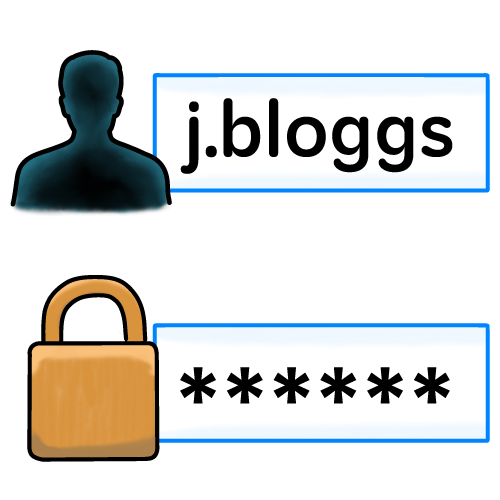
A user identifies themselves by entering a user name and password.
If the user name and password match entries in a database, access is granted.
Passwords should be difficult to guess. Long, complex passwords reduce the risk of vulnerability to a brute force attack.
Encryption

Data is encrypted using a key (a complex number) and can only be decrypted with a corresponding key.
Encrypted data cannot be understood without the key.
More information on encryption is in Section 1.3.2b.
Anti-malware Software

Software which monitors activity on a system, comparing running, downloaded, and emailed files to a database of malware. If malware (such as a virus) is detected, it is blocked and removed.
The software's database must be updated frequently, as new malware is being produced all the time!
Most anti-malware software can also identify new malware, not in its database, by recognising common behaviour.