What is the Internet of Everything (IoE)?
The Internet of Everything is the connection of people, processes, data, and things over the internet to make systems smarter, more efficient, and more responsive. These four connections are known as the Four Pillars of IoE.
-
The Four Pillars of IoE
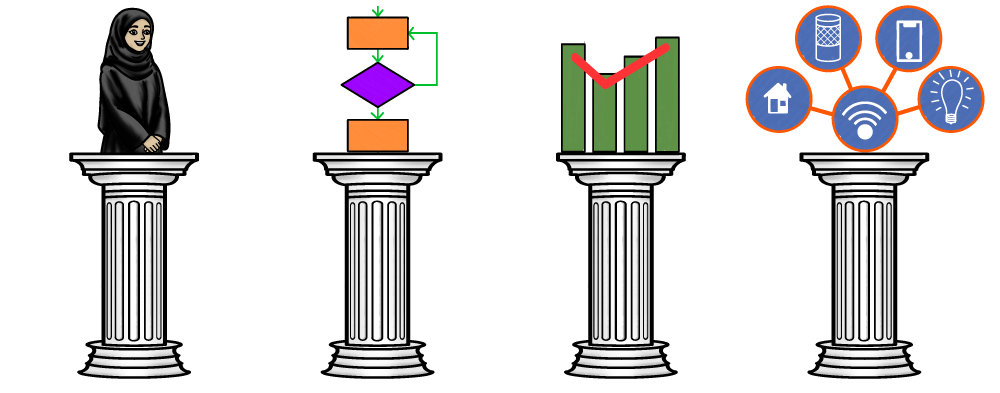
Click the arrow for an explanation of each pillar
-
The Four Pillars of IoE: People
Users interacting with systems. Giving instructions or receiving information.
-
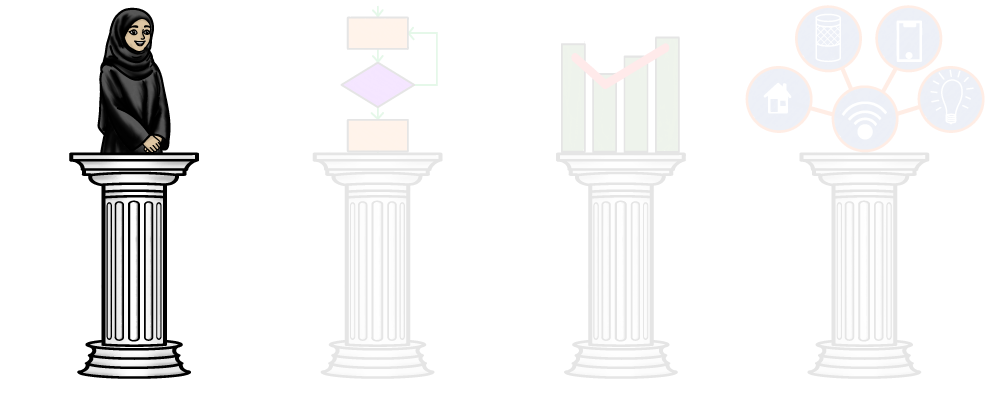
The Four Pillars of IoE: Processes
Rules or algorithms which decide what happens and when. These ensure the right action occurs.
-
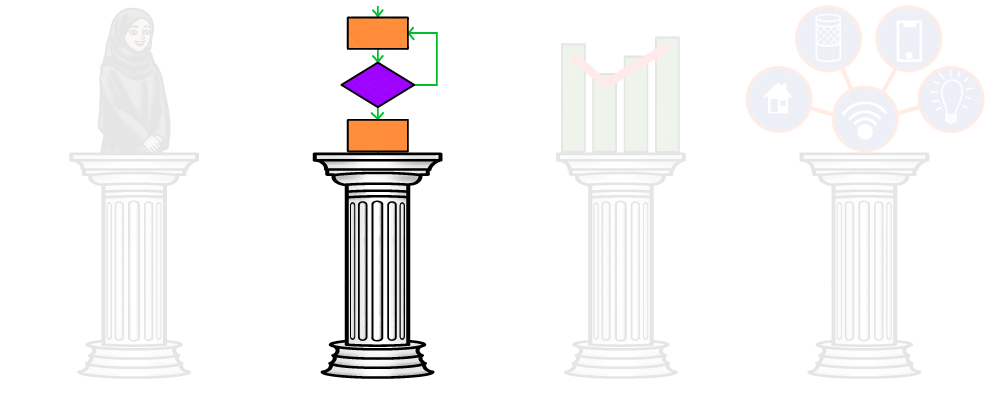
The Four Pillars of IoE: Data
Information collected from the devices.
-
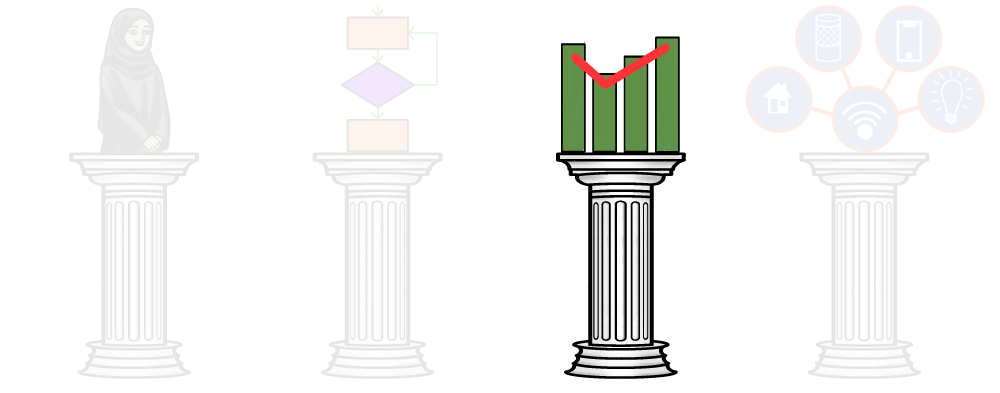
The Four Pillars of IoE: Things
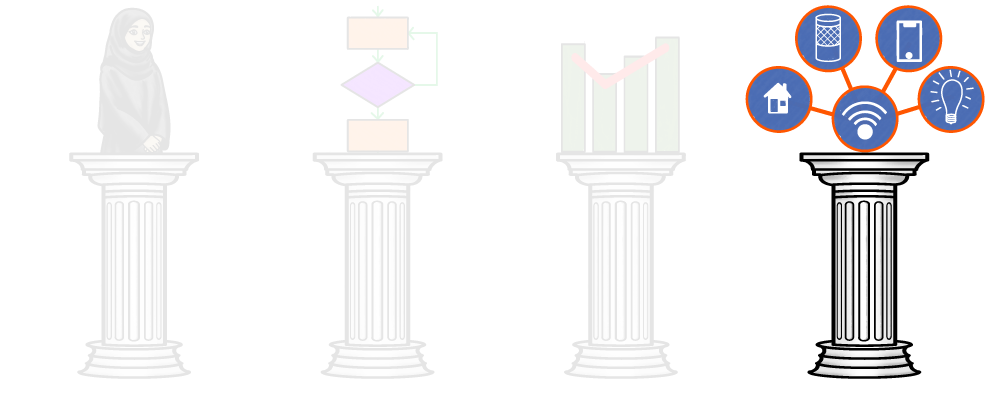
Physical devices connected to the internet. The contain sensors to collect data or actuators to perform tasks
Connectivity
Device-to-Device (D2D)
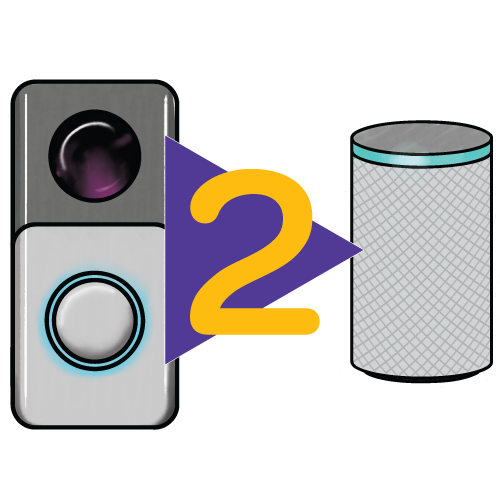
Devices communicate with each other to automate tasks. For example:
- Smart lights turning on when a motion sensor is triggered
- Car sensors activating automatic braking if an obstruction is detected
Human-to-Device (H2D)
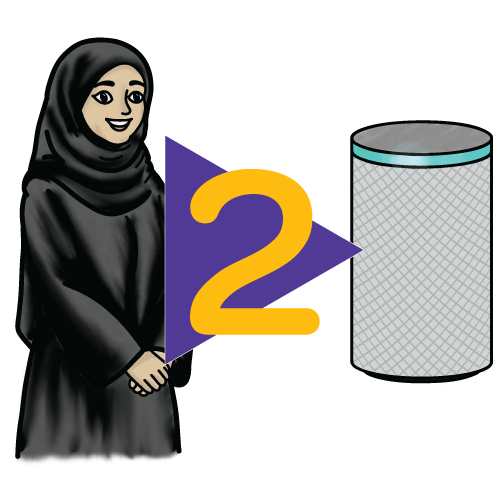
When we interact with an Internet of Everything device. For example:
- Telling a smart speaker to play music
- The device notifying us, such as making a noise or displaying a message
Internet vs World Wide Web
Most of the processing and storage required by IoE devices is performed in the cloud – servers somewhere else in the world. Devices use the internet to connect to the cloud servers.
The internet and the world wide web are not the same thing.
The Internet

The internet is the network of cables, routers, and other physical infrastructure which carry data.
World Wide Web

The world wide web is a service which allows web browsers to request and receive web pages.
The world wide web also uses the internet to transfer the data.
Tailoring Digital Devices
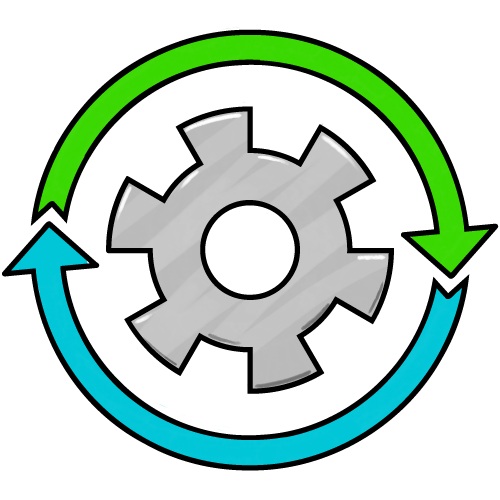
A key factor with the Internet of Everything is the ability to create automations – routines which activate automatically when certain conditions are met. Example:
- A garden sprinkler system which automatically waters the lawn if the weather forecast is sunny and a sensor detects the ground is dry.
Advantages and Disadvantages of IoE
- Tasks can be automated – useful for repetitive activities
- Can be personalised to individual needs
- Improved efficiency can save money and resources
- Can work 24/7 without human intervention
- Security risks – connected devices can be hacked
- Large amounts of data is collected
- Relies on constant internet access
- Devices may not be compatible with each other
- Automation may cost jobs