The Internet of Everything (IoE) is all around us… whether we realise it or not.
Key areas include:
- Energy management
- Health
- Business (manufacturing and retail)
- Military and emergency services
- Transport
- Around the home
Sensing and Doing
Sensors
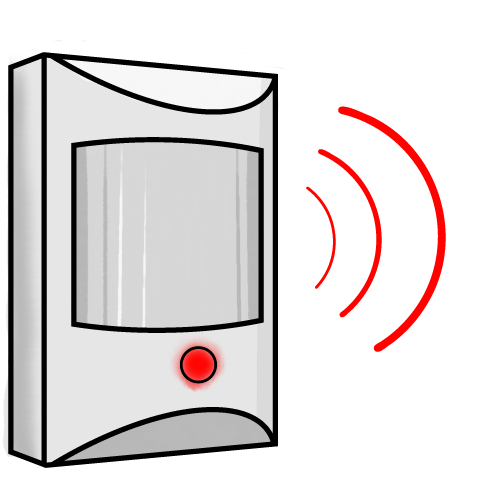
Many IoE devices automatically monitor their surroundings, they do not need us to tell them to do something.
They do this using sensors.
Each sensor will have a specific purpose, and monitor just one factor, e.g. a temperature sensor.
Actuators
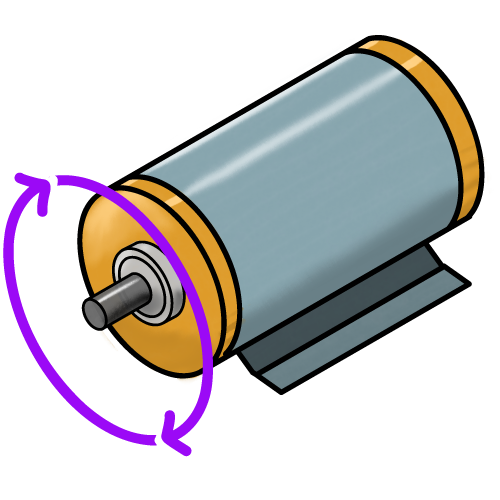
An actuator creates physical movement, based on the results of the process. A motor is a common type of actuator.
A motor may enable a device to move; liquids to be pumped; or a valve to turn, so liquids or gasses can flow
Energy Management
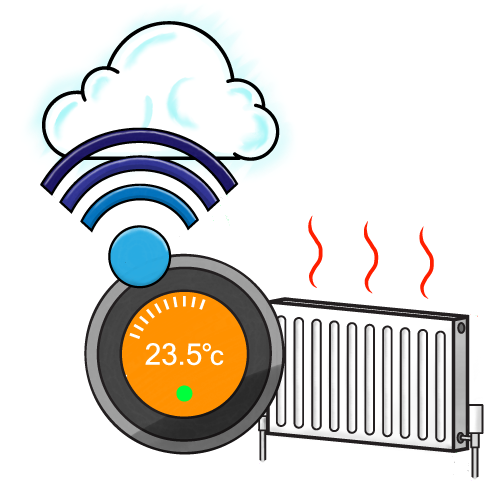
Smart meters collect energy readings and send them to the energy suppliers.
Prices and energy production can be changed depending on demand.
Heating and lighting can switch on / off depending on the user's location, weather forecast, or predictions on future usage.
- Reduces energy waste.
- Balances demand on the energy grid.
- Cheaper energy at off-peak times.
- Environmental benefits.
- Systems can be hacked.
- Smart meters collect detailed data about when people use electricity.
- Will not work without an internet connection and support from supplier.
Health Monitoring & Care
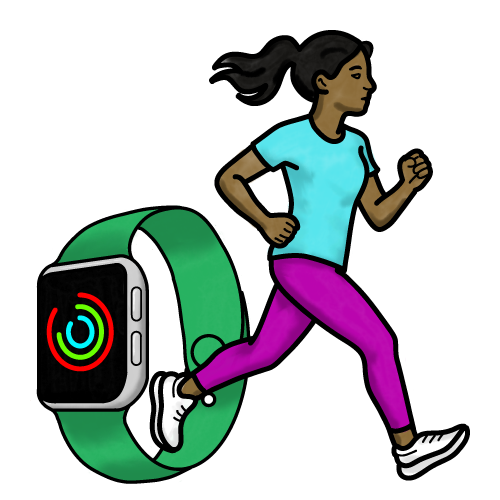
Devices such as smartwatches monitor a person’s physical activity.
They can connect to smart scales, gym equipment, and other devices to monitor activity and health. Some of the data they gather includes: overall fitness levels, activity, emergency health situations, and sleep patterns.
IoE devices also allow continuous monitoring of people receiving health care. For example, an elderly person may have devices which automatically send an alert to carers or the emergency services if a health problem is detected.
- 24/7 monitoring.
- Automatic alerts in an emergency.
- Supports people living independently.
- Reduces pressure on health services.
- Health data is very sensitive and could be hacked.
- Inaccurate readings can lead to unnecessary panic or missed conditions.
- Monitoring is dependent on connectivity and battery charge.
Business (Manufacturing & Retail)
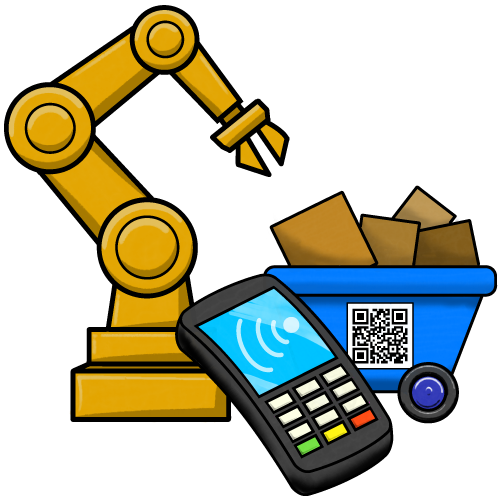
Using QR codes and RFID tags, manufacturers are able to track products, automating machinery to assemble, move and despatch to the customer.
Efficient delivery routes are calculated, and the customer is updated throughout.
Stock levels are monitored and re-ordered is done automatically. The customer can pay using contactless cards and smartphones.
Performance is monitored and can often detect a fault before it causes a problem. This allows maintenance teams to order parts in advance and schedule downtime.
- Early detection of faults.
- Automatic adjustment of processes to improve efficiency.
- Real-time monitoring reduces defects and waste.
- Identification of bottlenecks to improve workflows.
- Cost of installing systems.
- Risk of data theft or disruption due to hacking.
- A fault may stop all production.
- Time and cost of training staff to use the systems.
- Managing large amounts of data.
Military & Emergency Services

Fast and accurate communication is key for successful management of an emergency situation.
Emergency workers, vehicles, or soldiers can be tracked in real time so commanders can coordinate teams and send help quickly.
Drones, body cams, and environmental sensors send live data to control centres, helping leaders male fast, informed decisions.
Wearable IoE devices can monitor health or exposure to danger, alerting teams if someone is at risk.
- Faster speed of response in emergency situations.
- Precise location of responders, directing response to where it is most needed.
- Recording of evidence for legal and training purposes.
- Improved safety for workers.
- Tech may be unreliable in extreme conditions.
- Damaged infrastructure may prevent systems and connections from working.
- Incorrect data may lead to false alarms.
- Hackers may cause disruption.
- CCTV and other data collection may raise concerns about surveillance.
Transport
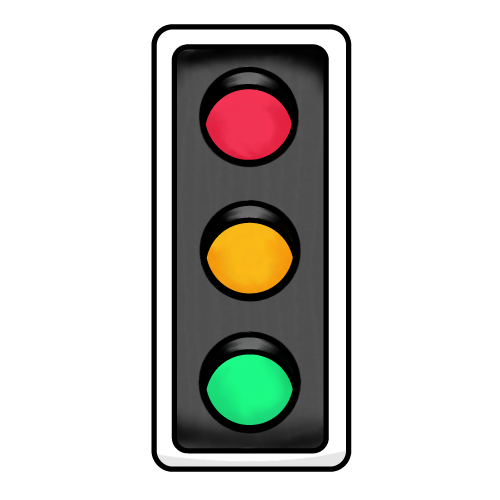
Transport networks are constantly monitored by sensors on roads, public transport, in connected vehicles, and from navigation systems. They check for speed traffic, overcrowding, number plates, and faults with vehicles.
The data is used to adjust traffic light timings, set variable speed limits, open and close lanes, and report breakdowns and traffic collisions.
Travellers are updated through digital signage, passenger announcements, and re-routed navigation on sat nav apps.
- Improved traffic flow.
- Faster emergency response.
- Improved public transport reliability and information.
- Smoother traffic flow reduces fuel use and emissions.
- High installation and maintenance costs.
- System failures can cause severe transport problems.
- Cybersecurity and privacy concerns.
Internet of Everything Around Us and Our Home
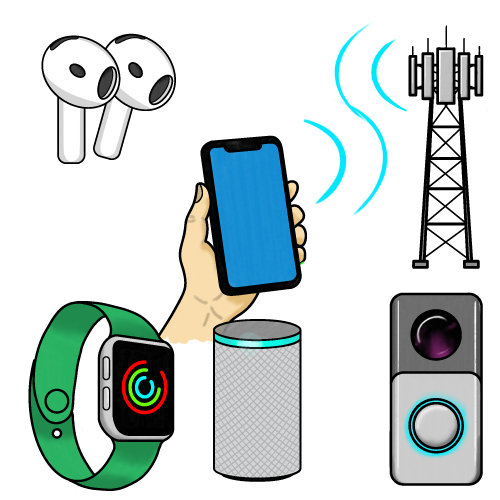
As technology gets smaller and cheaper, we are increasingly installing it in our homes and carrying it around with us. They allow improved security, convenience, and communication.
Around the home, smart doorbells record and identify visitors; lights automatically come on at night or set the mood of an evening; vacuum cleaners and lawnmowers keep our homes clean whilst we are out.
We carry our own personal area network: our 5G-enabled phone streams music to our Bluetooth headphones whilst our smart watch tracks and records our movement.
- Devices can work together automatically (e.g. lights turn off when you leave home, heating adjusts to your schedule).
- Smart alarms, cameras, and door sensors improve security.
- Wearables can track heart rate, sleep, activity levels, and notify users of potential health issues.
- Smart thermostats and plugs reduce wasted electricity by switching devices off when not needed.
- Devices learn user habits and preferences, giving tailored recommendations and settings.
- Connected devices collect large amounts of personal data that could be misused or accessed without permission.
- Poorly secured devices can be hacked, giving attackers access to personal data or home systems.
- Many IoE devices stop working properly if Wi-Fi or cloud services fail.
- Smart systems often require expensive on-going subscriptions.