How a business communicates with its stakeholders (such as staff, customers, suppliers, and shareholders) is vital to its success. Methods of communication must be:
- Appropriate to the audience
- Cost effective
How it communicates with different recipient demographics will vary.
Categories of Communication
We can broadly classify methods of communication into the groups below, although some methods overlap (e.g. a promotional video may be used on a website and social media).
Digital

Audio

Video

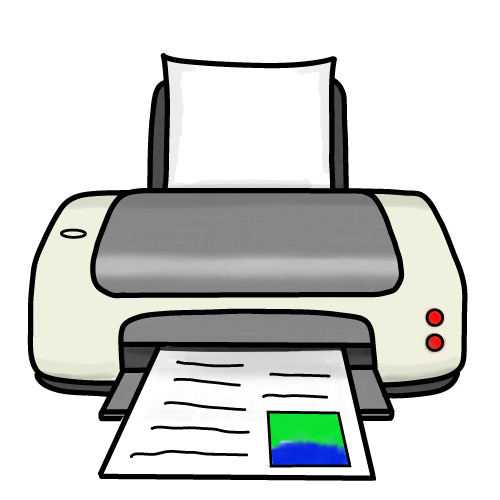
Types of Printed Communication

Leaflets
A single piece of paper, usually A4 size, which may be folded into thirds.
Provides information or advertising to the public.

Newsletter
One or more sheets of paper, often used for communicating with employees.
Can be thought of as a mini-newspaper for staff.

Report
A booklet containing business analysis, often given to investors.
A report will contain text, graphics, charts, and tables of information.
Pros and Cons of Printed Communication
- No device needed: can be read anywhere
- Easy to physically share
- Tangible and long-lasting
- Leaflets are good for local marketing
- Cost: printing and distribution can be expensive
- Wasteful: creates paper waste
- Cannot be updated once printed
- Limited distribution: only reaches people it is physically given to
- No interactivity: responding requires extra work (e.g. typing an email address)
Digital Communication

Websites
Organisations can use websites to share information, market themselves, or sell their services or products online.

Social Media
Organisations can communicate with large numbers of the public.
However, they lack control over how users will interact with them.

Presentations
A series of slides used to communicate information to lots of people at once.
Often used to deliver lessons in a classroom, or training staff in a business.

Collaboration Tools
Allows lots of people to work on the same document at the same time.
Useful for group projects and training sessions.
Pros and Cons of Digital Communication
- Fast: instant communication across the world
- Low cost: cheaper than printing and posting material
- Supports remote working: staff can work from anywhere in the world
- Up to date: digital media can be quickly updated to include new content
- Security risks: hacking and data breaches pose a threat
- Tech failure: outages can stop all communication and production
- Digital divide: not everyone has access to technology
- Impersonal: messages can lose the personal touch of face-to-face contact
Audio Communication
Recordings of meetings, speeches, conversations can be made, replayed, and shared with staff.
Podcasts can be distributed on platforms such as Spotify.
Radio adverts can reach a wide audience of people who are at work or driving, and otherwise unable to access other forms of communication.
VoIP

VoIP (voice over internet protocol) is a way to make phone calls across the internet rather than using a conventional telephone line.
This is much cheaper (or even free) compared to using a standard phone line.
It is especially cost effective when making long-distance calls to other countries.
Video Communication
Companies are increasingly using video to reach a wide audience.
Videos can be published on websites such as YouTube, an organisation’s own website, social media, and on television.
Whether used for advertising or training and education, video is engaging and popular.
However, it requires a fast internet connection and lots of data allowance. Producing a professional-quality video can be very expensive.
Infographics

An infographic is a simplified chart used to convey complex information, such as statistics or comparisons. Simplified text information is supplied to provide some detail.
Charts and graphs may sometimes be converted to illustrations to further catch attention and simplify the data.
Infographics may be used in print, digital, or video communication.
Data may be presented as:
- Pie charts
- Graphs
- Maps
- Diagrams
Pros and Cons of Infographics
- Easy to understand
- Eye-catching
- Simple and quick to read
- Helps readers remember
- Can oversimplify information
- Requires good design skills
- Can be misunderstood
- Poor for showing complex data with detail